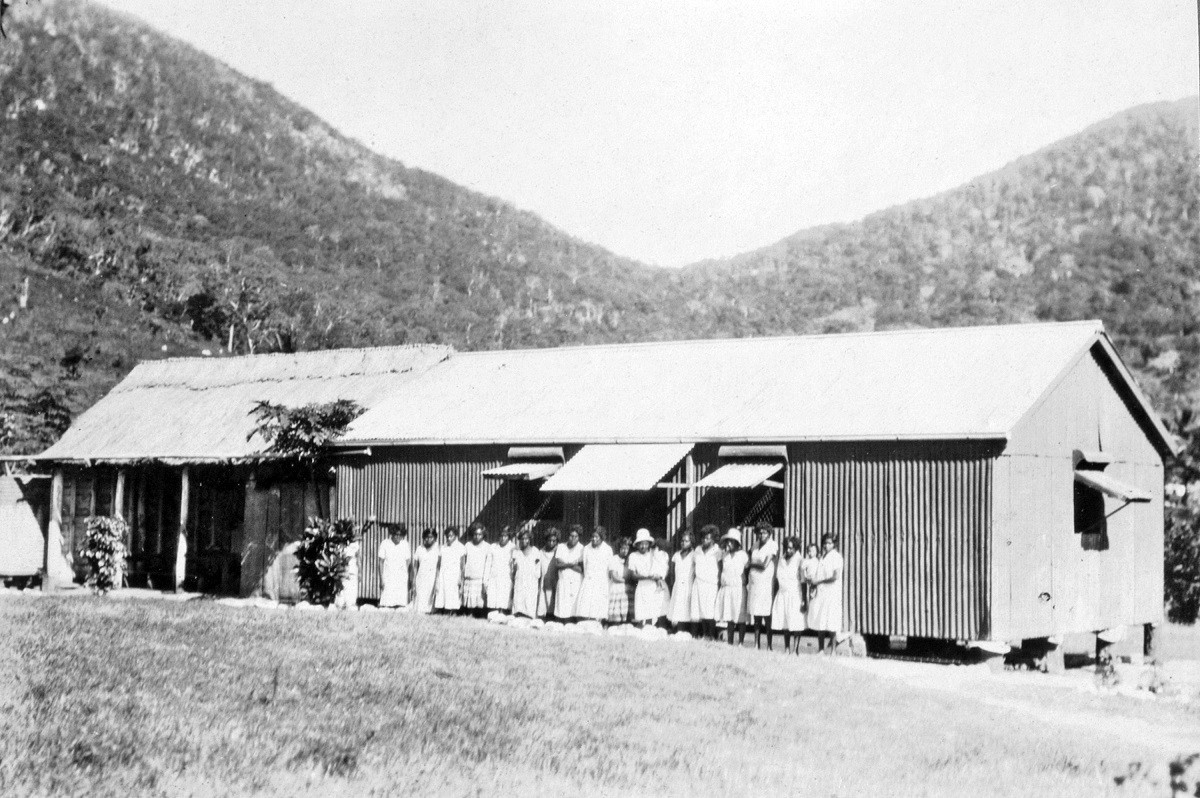
Down in the Kitchen is a dormitory song from the 1930s, sung by Aboriginal children on Palm Island Aboriginal Settlement in North Queensland. Under the oppressive Aboriginals Protection and Restriction of the Sale of Opium Act 1897, Palm Island became a forced relocation site — often described as Australia’s equivalent of Alcatraz for Aboriginal and Torres Strait Islander people. Families were torn apart, with many children and adults removed from their homelands, severing ties to culture, community, and Country, with devastating and lasting impacts.
Jessie Lloyd’s grandmother, Alma Geia, was just 8 years old when she and her younger sister Nancy were taken from their family in 1929 and sent to Palm Island. In the dormitories, the children sang this song to make fun of the meagre food rations — a small act of humour and resistance in the face of hardship. Alma's lyrics offer a rare glimpse into the daily realities of life during the missions era.
Alma never spoke openly about her experience, like many survivors, but she passed this song down to her children and grandchildren. It became her quiet way of telling the truth, of keeping memory alive without reopening old wounds.
Today, the Geia family shares this song with Australia as an act of truth-telling, healing, and reconciliation. Like many songs from the mission days, Down in the Kitchen helps uncover a part of Australia’s history that has long remained hidden.